Empowering the People the World Relies On
A five-day weekly content program I designed from a one-line brief, and the production pipeline that lets one person keep up with it.

- Brief
- A positioning line, Empowering the People the World Relies On, and a request for a plan
- Status
- Running, and built to change with the data
- My part
- Program design, launch timeline and weekly cadence. Hero video production. Weekly video, carousels and statics.
- Tools
- Premiere ProClaudeClaude DesignGoogle AI StudioEpidemic SoundAdobe Stock
A line and a slide deck
My manager gave me a slide deck with the brand positioning, Empowering the People the World Relies On, and asked me to make a plan. Everything after that was mine to work out: the launch date, the timeline, what goes out each day, and how the program changes over time and in response to the numbers.
Five days, five kinds of post
I wanted to post every day as one person, so the program runs on a five-day week. Monday’s hero video is the most deliberate slot because it sets the tone for the week. The rest followed from there.
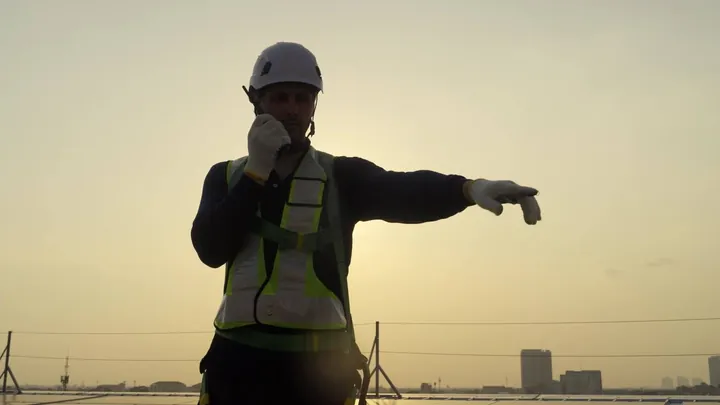
A cinematic video about a sector that relies on Mattermost.
One feature in depth, and how it helps the people using it.
Lighter: how people feel empowered working at Mattermost.
A static that puts a mission term, like data spillage, in context.
A format that performs well on LinkedIn, chosen week to week.
Mixing video, carousels and statics was the experiment. We had no read on what this audience responds to, and finding out was part of why I was hired. The plan was to run it for four weeks, see what performed and change it.
Fixing the weak day
Friday launched as Mission Moment, and I knew going in that it was the weakest idea. It came together under a deadline while I was still workshopping it. Then my manager shared a chart of which post formats perform best across LinkedIn as a whole, with listicles at the top, and suggested we use them. That was the missing piece.
Friday became open format. It always uses a format that performs well on LinkedIn, and the content changes each week: a checklist of five controls to set before you deploy an AI agent, or a comparison of a team with a feature and without it.
A hero video every Monday
The quality bar and the volume didn’t fit a normal workflow. The problem I had to solve was this: how can I make the quality of content I want at the amount of output being requested? I researched the best tool for each step and connected them into a pipeline I run every week.
- 01Script
Claude drafts it from the sector and Mattermost’s docs.
Claude - 02Research
I ask our technical account managers how customers use the product, so the video reflects real use without naming anyone.
People - 03Voiceover
One brand voice, used across all our content.
Google AI Studio - 04Edit
The voiceover goes into Premiere and sets the cut.
Premiere Pro - 05Footage
I source stock to brand rules, true to the sector and fair to the people in it.
Adobe Stock - 06Motion
A word-by-word transcript from Premiere becomes animated graphics, exported as an overlay.
Claude Design - 07Sound
Music and sound effects.
Epidemic Sound - 08Finish
Mix, export, feedback, final.
Premiere Pro
The tools each handle one step. The footage choices, the brand rules, how each sector is shown and the final cut are mine.
How can I make the quality of content I want at the amount of output being requested?
What the numbers say so far
A few weeks in, carousels draw the most engagement and the Behind the Mission statics do well. Produced video is doing less than I expected, and our past data shows live event video outperforming produced video. So I’m building a way to source more live event coverage: tracking upcoming events and reaching out to people attending them for content. The program was designed to change with the data, and this is where the first change comes from.
Gallery
The posts themselves · tap to enlargePosts from the program, Monday to Friday. The hero video uses licensed stock footage.